



Disclosure: New position. We own this one.
We do not typically invest in real estate (and hate the REIT model), but we have made exceptions for special situations and management teams who are doing things differently. Today, we have a new one.
Core thesis:
High free cash flow yield for real estate running as a Corp and trading at a relative discount to asset values.
Underappreciated CEO is making thoughtful progress through operational improvements and acquisitions.
A short-term valuation per share would reasonably be double the current share price. However, management is doing interesting things, and we view this as more than a short-term trade. Management is compounding value through interesting deals.
Position: New. Size: Tier 2.
Disclaimer - The content contained in this blog represents the opinions of contributors. You should assume contributors have positions in the securities discussed, whether long, short, or somewhere in between, and that this creates an obvious bias and conflict of interest regarding the objectivity of this blog. Statements in the blog are not guarantees of future performance whatsoever and are subject to certain risks, uncertain risks, and other factors. Information might also be completely out of date and may or may not be updated. In addition, no one guarantees the accuracy of any information provided and none of the information should be construed as investment advice or any other kind of advice under any circumstance, and the blog is a blog and not a registered investment advisor or broker in any jurisdiction. Frankly, no information here should be used for any purpose, except for entertainment (and we hope you enjoy).
Doing Real Estate Differently
The problem with real estate in Canada is it typically attracts a lot of bad capital/dumb money and lenders are often keen to help them. In fact, outside of special situations, we have only ever invested in one other real estate business, Mainstreet Equity.
Mainstreet’s model focuses on repositioning distressed and poorly-maintained properties, successfully recycling capital to now own over 19,000 units (>$1B) while effectively not raising any capital for two decades. See our deep dive here (still long): https://www.canadianvalueinvestors.com/p/mainstreet-equity-tsxmeq-the-apartment
Nexliving is doing things differently, too. They are much earlier on in their journey, but the deals they have done so far under current leadership have piqued our interest.
What is Happening Here?
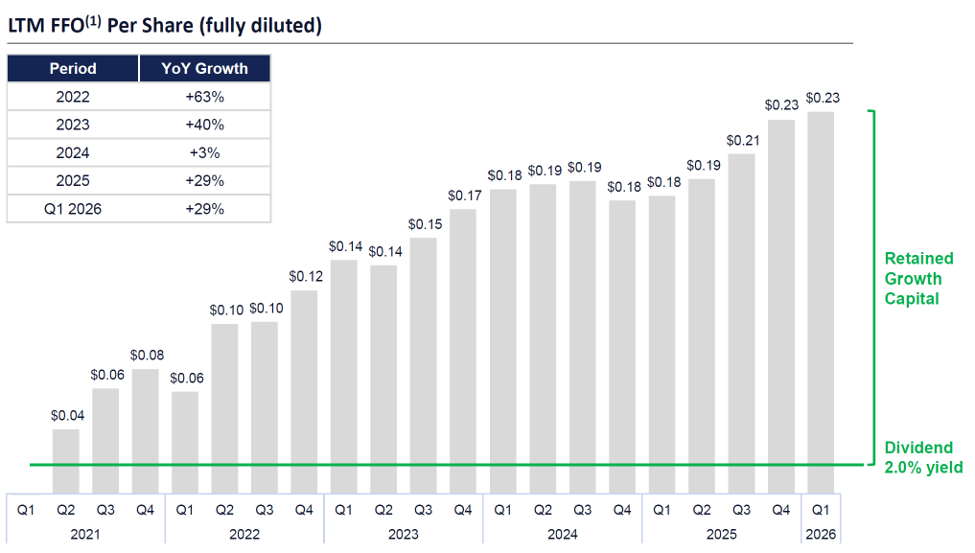
Isn’t this an interesting chart? Since CEO Stavro Stathonikos joined in 2021, FFO per share has gone up and to the right while dividends have stayed flat...
The NexLiving Model
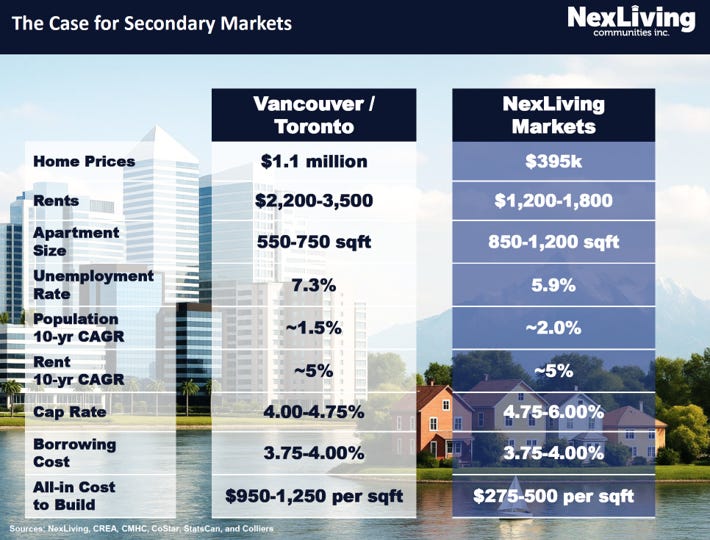
Nexliving Communities owns and operates multi-family “active seniors” housing properties. What does this mean? They are trying to arbitrage the value of properties near major urban centers, but are much cheaper, and being filled up with active seniors who are selling their high-priced homes bought 30+ years ago to move into a relatively low rent (vs the big city) but well taken care of property. These folks are typically good renters, helping to reduce maintenance capex and operational costs. In addition, the cost of debt financing these properties is effectively the same as “Core Markets” (i.e. Vancouver and Toronto) while having much better NOI yields.
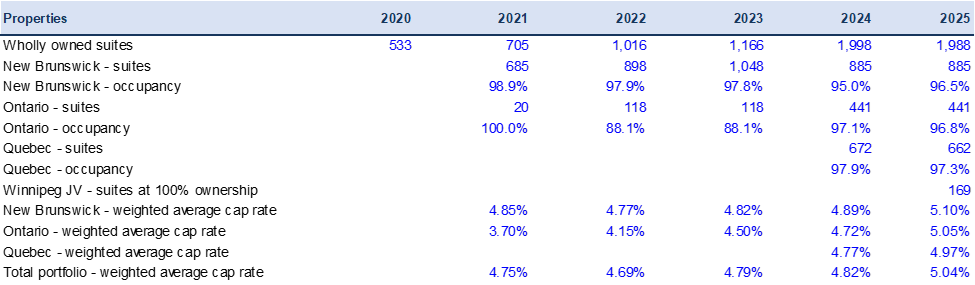
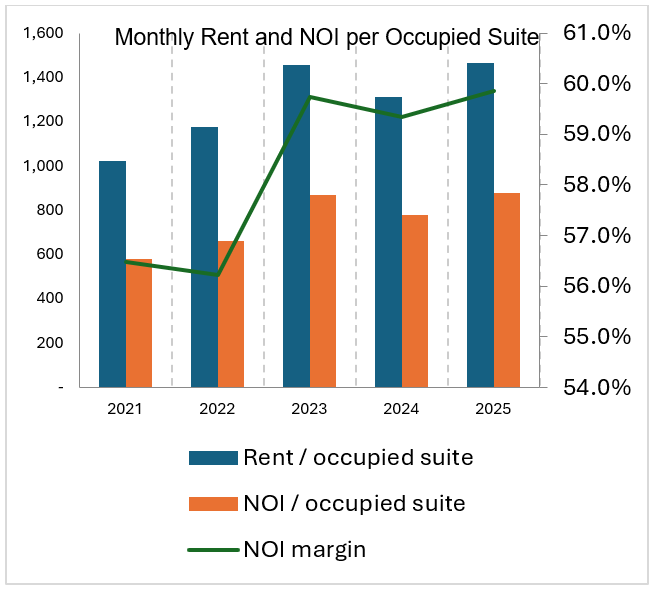
This strategy has evolved over time. At first, this was a pool of New Brunswick properties with third party management that were being financed with expensive convertible debentures. Today, this is in-house managed assets across several provinces with simplified and cheap CMHC insured mortgages. Occupancy is high with NOI and NOI margin improving.
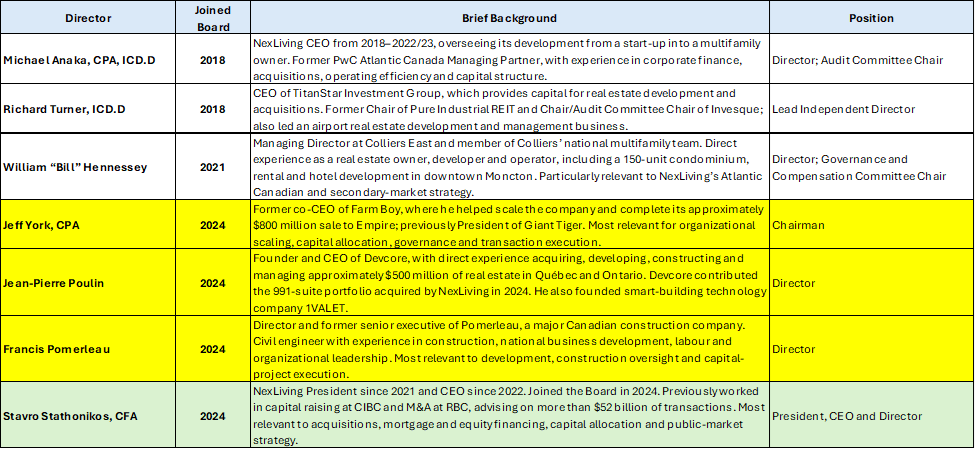
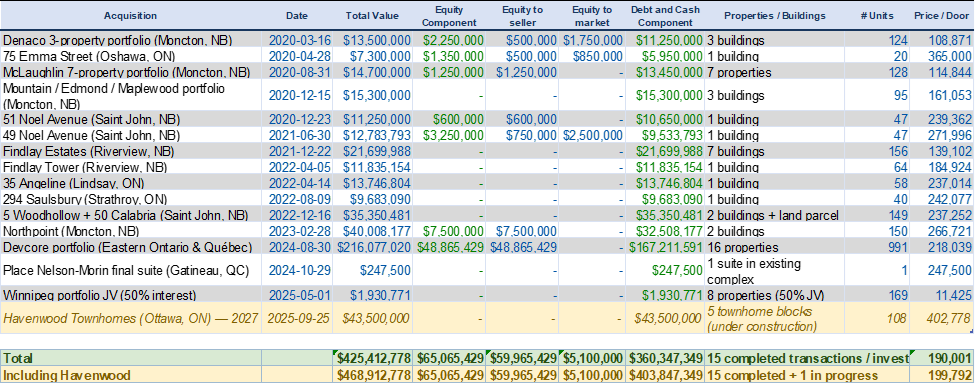
We view this was a two-step process. The first was Stavro becoming CEO in 2021, coming from an investment banking background. The second phase was in conjunction with the 2024 acquisition of the Devcore assets, which doubled the size of the company, gave diversification (Ontario and Quebec), and majority in-house property management. In addition, there was a Board refresh with Jean-Pierre Poulin (Devcore), Francis Pomerleau (from Pomerleau construction), and Jeff York (of Farm Boy) joining the board. We view the current Board as surprisingly well equipped given Nexliving’s current size. This is a group of interesting people working on an interesting business.
The Evolution of the Portfolio
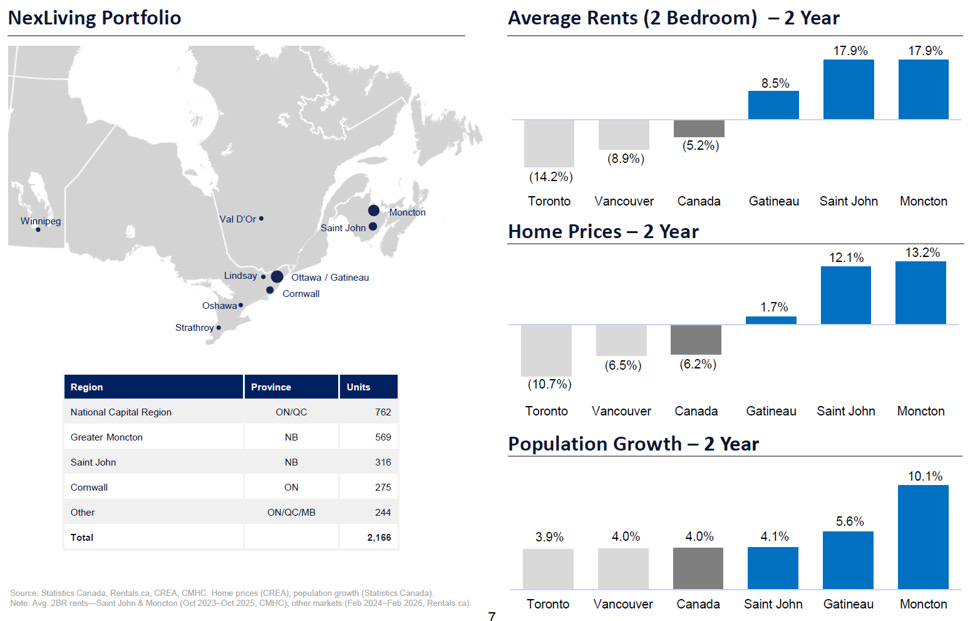
As previously mentioned, the two key parts of the model are bringing property management in house and diversification.
Diversification helps. For example, New Brunswick has been a challenging market to operate in. As a side bar, we continue to view political risk as under-priced in Canada and often over-priced in other markets. Back in 2024…
The increase in same property expenses for the three-month period was due to a 10% increase in property taxes in New Brunswick and increased maintenance expenses across the portfolio. For the twelve-month period, expense growth was driven by a 12% increase in property taxes in New Brunswick, partially offset by lower repairs and maintenance costs across the portfolio.
While at the same time the province introduced rent control in 2022 and constantly changing the details of the policy since (current 3% increase cap annually, at least today): https://legalinfonb.ca/legal-info/landlord-tenant/rent-increases
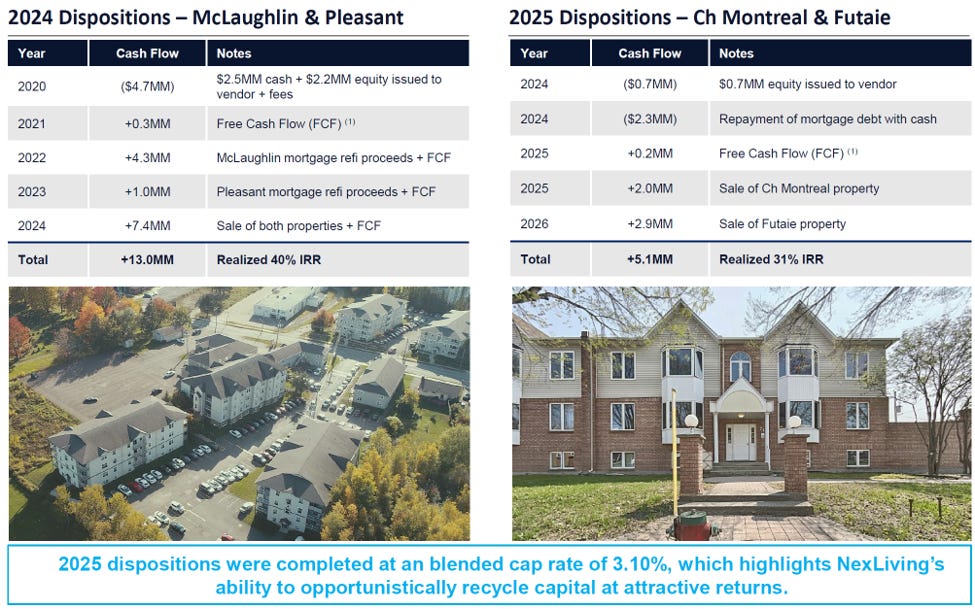
It has primarily been a build and maintain portfolio, but they have done a few dispositions over the years and highlight a few cases (we do not view this as cherry-picking; they just have not sold much).
Debt Management
Previous approach
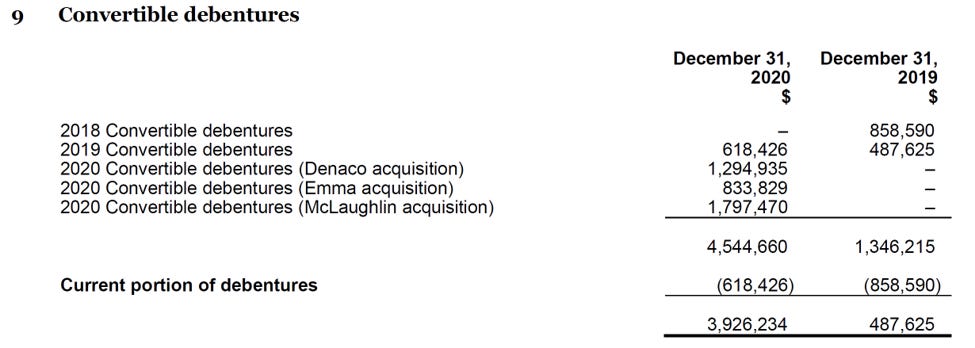
Previous management strategy was complex and leaned significantly on expensive convertibles and warrants, likely causing shareholders not sitting the board room to scratch their heads trying to figure out the economics.
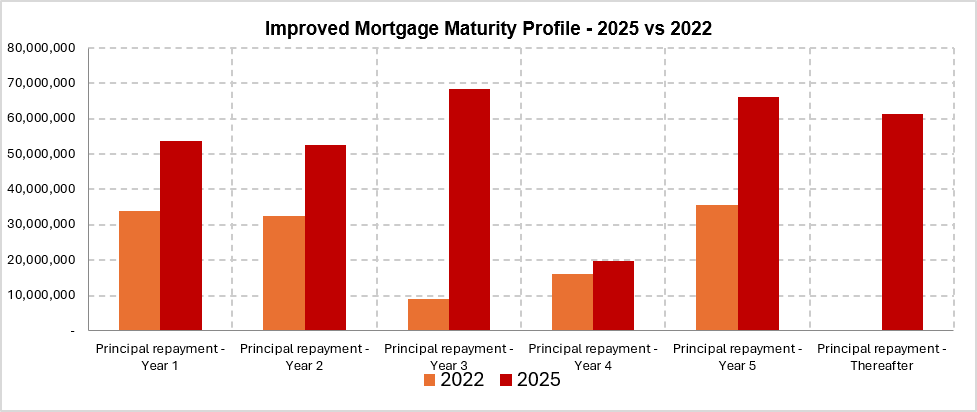
Improved debt profile – Step change in approach
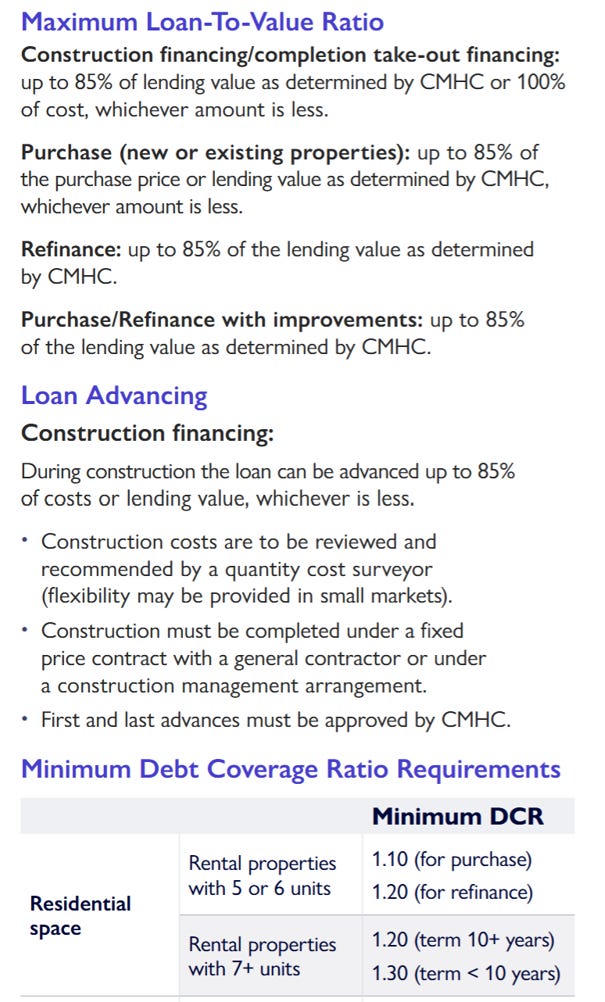
Properties are now typically financed with Crown corp Canada Mortgage And Housing Corporation (CMHC) insurance. The low cost might not be fully appreciated by investors who do not look at residential multi-family units. Some doomsdayers fret about real estate in Canada, but it seems that the Federal government is quite keen to maintain values.
The Company’s mortgages bear interest at a weighted average interest rate of 3.14% (2025 – 3.17%) with a remaining weighted average term to maturity of 3.5 years (2025 – 4.0 years). The fair value of mortgages payable is approximately $325.6 million and has been determined by discounting the future cash flows using discount rates that reflect current market conditions for instruments with similar terms and risks.
For those not familiar, CMHC has a lot of program information including this summary - https://assets.cmhc-schl.gc.ca/sf/project/cmhc/pdfs/content/en/standard-rental-housing.pdf
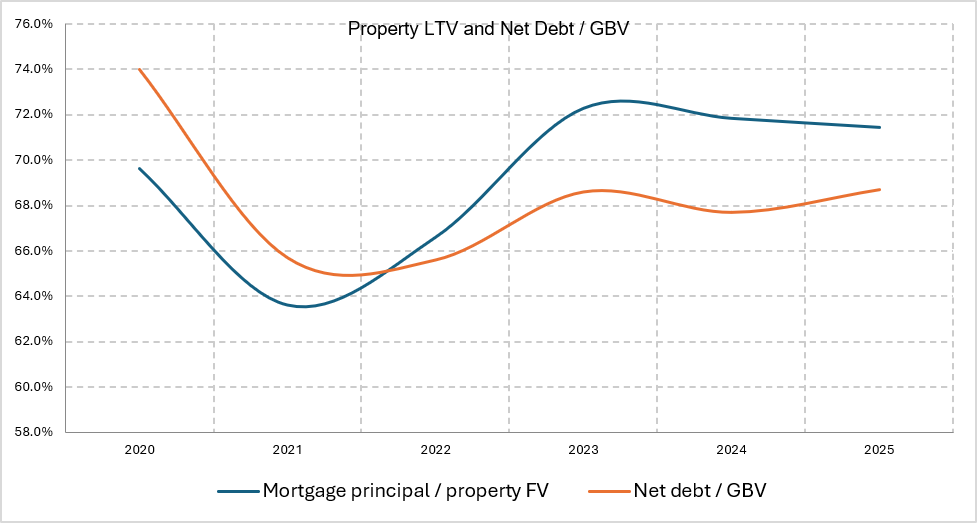
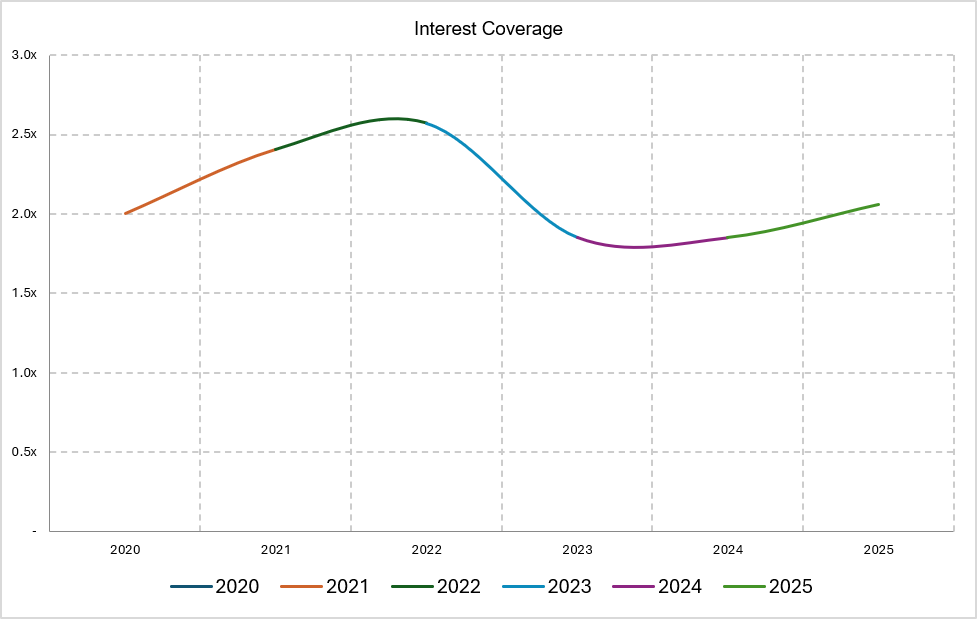
And while property financings are amortized, in reality they can be continually refinanced as a portfolio. There are opportunities to increase liquidity.
On April 3, 2024, the Company refinanced its mortgage on the 5 Woodhollow Park property and entered into a new $9.3 million CMHC insured mortgage for a ten-year term with a fixed interest rate of 4.40%. The new mortgage replaced the maturing $7.5 million mortgage.
On April 23, 2024, the Company refinanced its mortgage on the 49 Noel property and entered into a new $9.4 million CMHC-insured mortgage for a ten-year term with a fixed interest rate of 4.18%. The new mortgage replaced the maturing $8.7 million mortgage.
Borrowing up to 80% of LTV is possible under CMHC (even higher at higher fees); we view their property valuations on their balance sheet as a reasonable proxy to the CMHC valuations, and we view there being sufficient cushion in place.
Book Value Considerations
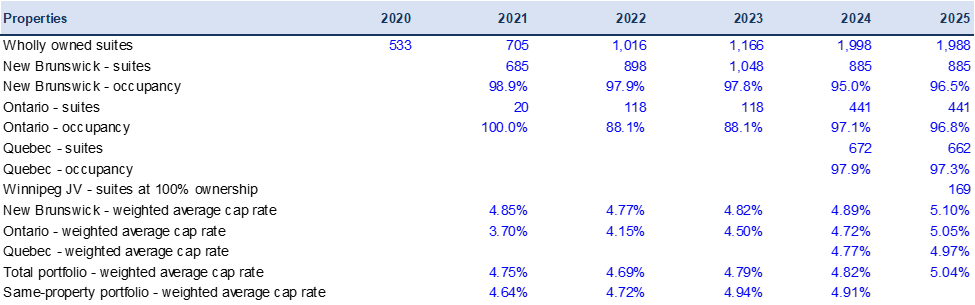

Nexliving is trading at a large discount to its NAV. We view the underlying public statement assumptions as reasonable, but we would not want to buy these properties ourselves at their NAV (though other real-estate focused investors just might). Instead, we view this as a reasonable floor valuation, with recent market acquisitions providing comfort and management deploying capital generated into interesting new property opportunities.
It is a low cap rate assumption, but a recent sale provides context:
On October 9, 2025, the Company closed on the sale of the 10-suite property located on 1101 Chemin de Montreal, Gatineau, QC for $2.0 million, implying a 2.95% capitalization rate based on trailing twelve-month results. As part of its ongoing portfolio optimization strategy, the Company has identified certain additional non-core properties in its portfolio that are being evaluated for disposition.
Other Buyouts
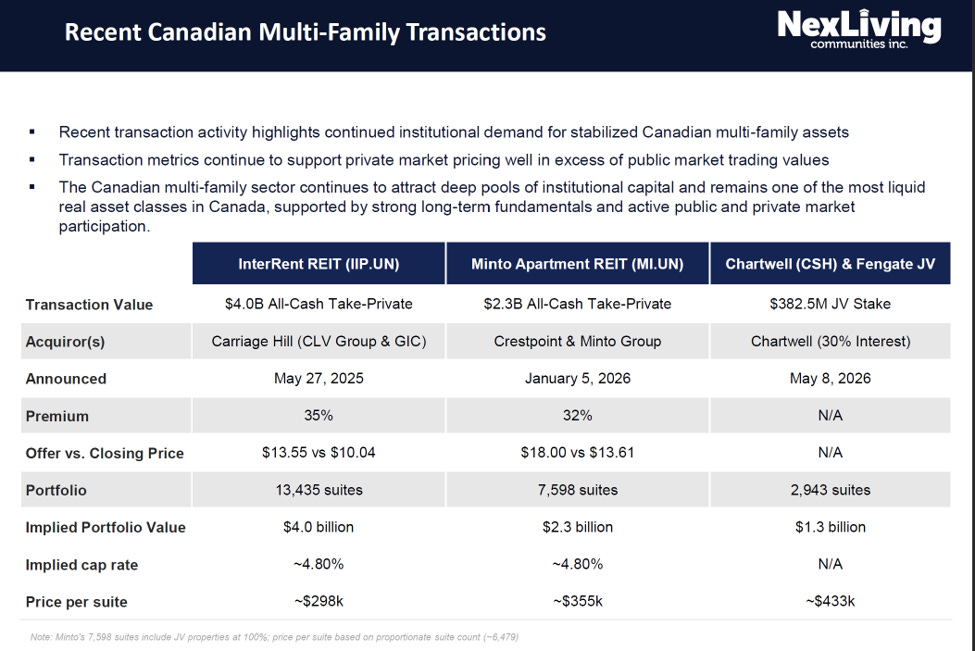
The Company points to key recent take privates. Overall, we find the to be reasonable comparables.
For those curious, InterRent’s circular can be found here - https://assets.irent.com/image/upload/v1753898592/Reports/Events%20and%20Presentations/Management_Information_Circular.pdf
And Minto’s here - https://media.minto.com/website/index/image/Minto%20Apartment%20REIT%20-%20Information%20Circular%20for%20Special%20Meeting.pdf
But What is FFO Anyway?
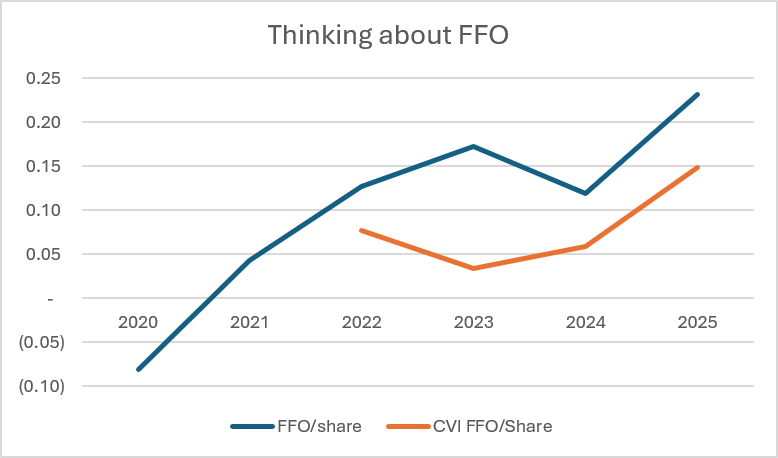
The Company defines it as:
“FFO” is defined as net income adjusted for fair value gains (losses), gain (loss) on sale of investment properties, accretion expense and deferred tax expense.
We adjust as shown below.
