
Disclosure: We own this one. Hold size/conviction: Special situation bucket
Today we have a fun story. Looking through our archives, this is one of the most niche public companies we have ever written up and it is an adventure. In fact, this article was delayed by us getting lost down a few rabbit holes. If rail car manufacturing is a niche industry, and tank cars are a subset of that, what about the valves on tank cars? And what does an R&D project for a truck off-road suspension system have to do with any of it?
Kelso Technologies is microcap TSX Tier 1 listed Canadian company whose actual operating business is in Bonham, Texas. It designs and manufactures safety-critical valves and fittings used on North American rail tank cars. With a <$10MM market cap the stock is illiquid, its customers are much larger than it is, while recent financial performance is held down by industry activity at a trough.
This is a turnaround in progress. New management has shut down former management’s expensive diversification adventure, cut costs, and just delivered a long-awaited new product that needed Association of American Railroads’ (AAR) approval. What tools do they have in their toolbox?
Disclaimer - The content contained in this blog represents the opinions of contributors. You should assume contributors have positions in the securities discussed, whether long, short, or somewhere in between, and that this creates an obvious bias and conflict of interest regarding the objectivity of this blog. Statements in the blog are not guarantees of future performance whatsoever and are subject to certain risks, uncertain risks, and other factors. Information might also be completely out of date and may or may not be updated. In addition, no one guarantees the accuracy of any information provided and none of the information should be construed as investment advice or any other kind of advice under any circumstance, and the blog is a blog and not a registered investment advisor or broker in any jurisdiction. Frankly, no information here should be used for any purpose, except for entertainment (and we hope you enjoy).
Table of Contents:
A Niche of a Niche: Rail Car Tank Valves
How Kelso Fits In
Industry Overview
Former Management Goes Off the Rails
New Management, New Products
Valuation: Where Are We Going?
Tools in the Toolbox
A Niche of a Niche: Rail Tank Car Valves
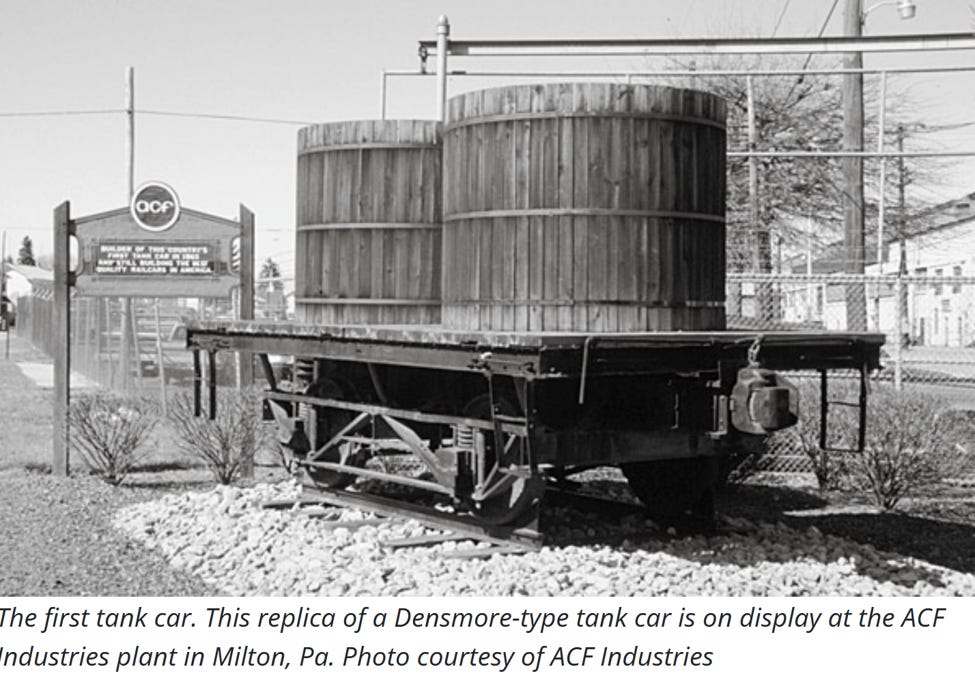
The first tank car in 1865: https://www.trains.com/mrr/how-to/prototype-railroads/development-of-the-railroad-tank-car/
Modern North American rail tank cars, being those built on or after July 1, 1974 according to the Association of American Railroads (AAR), have a life of a maximum of 50 years. In theory a tank can actually last longer than 50 years so long as it continues to pass inspections (good news for steam engines out there like UP’s Big Boy built in 1941), but the undercarriage of a rail car (holding the tank, wheels, and couplers together) have strict AAR interchange-safety-driven maximum life of 50 years as they worry about cars splitting apart. It would not be worth replacing the undercarriage. At the end it is scrap value.
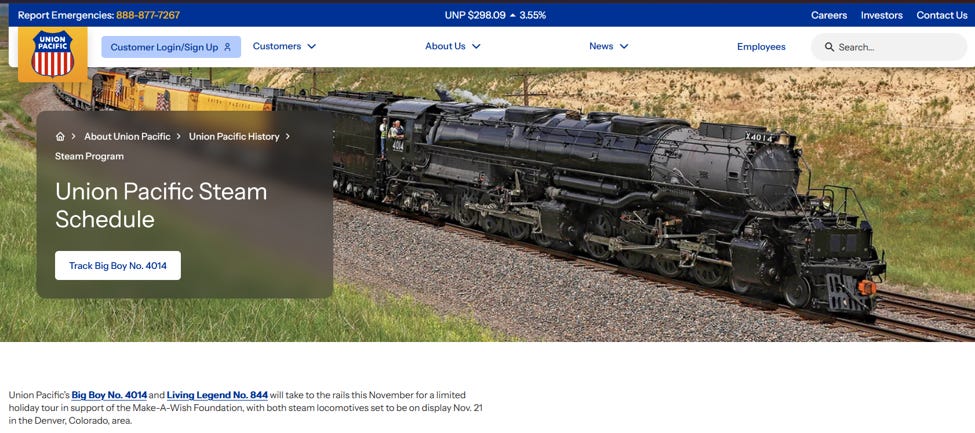
For those interested, you can track UP’s Big Boy schedule here - https://www.up.com/about-us/history/steam/schedule
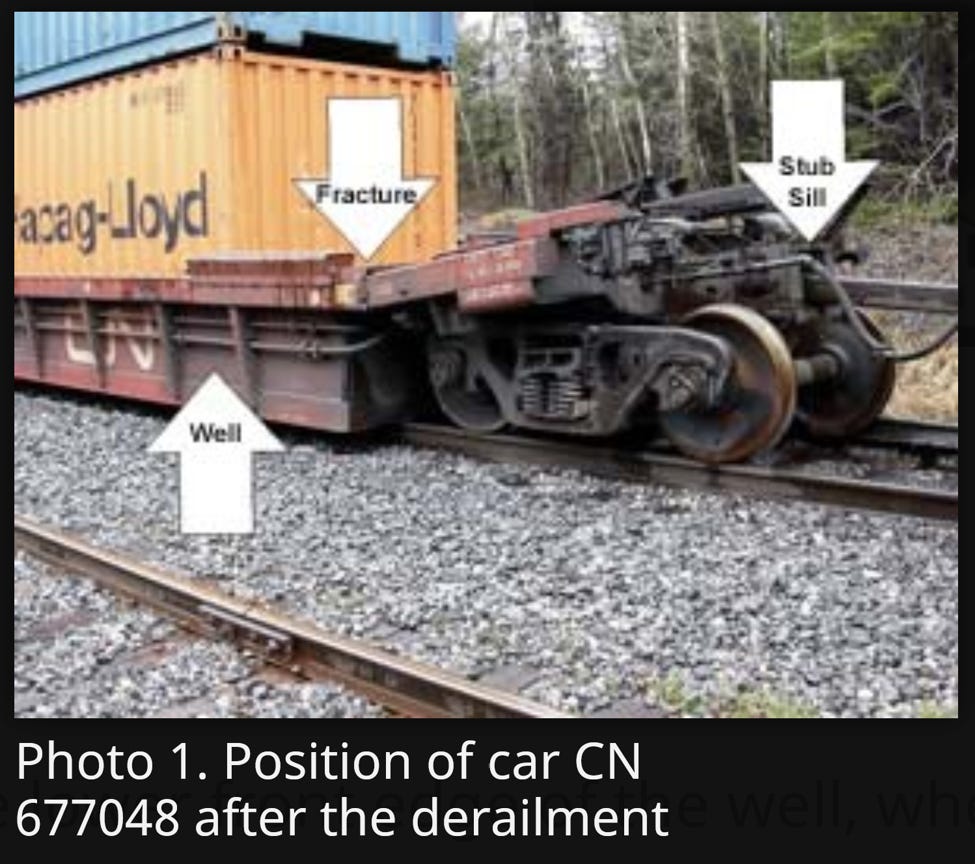
Standardization of American Railways began in the 1860s, but regulations were effectively reset when the AAR came to life in 1934. The AAR has many legitimate concerns, with one of them being when car frames fail. When a car frame fails, they look like this. https://www.bst-tsb.gc.ca/eng/rapports-reports/rail/2003/r03q0022/r03q0022.html
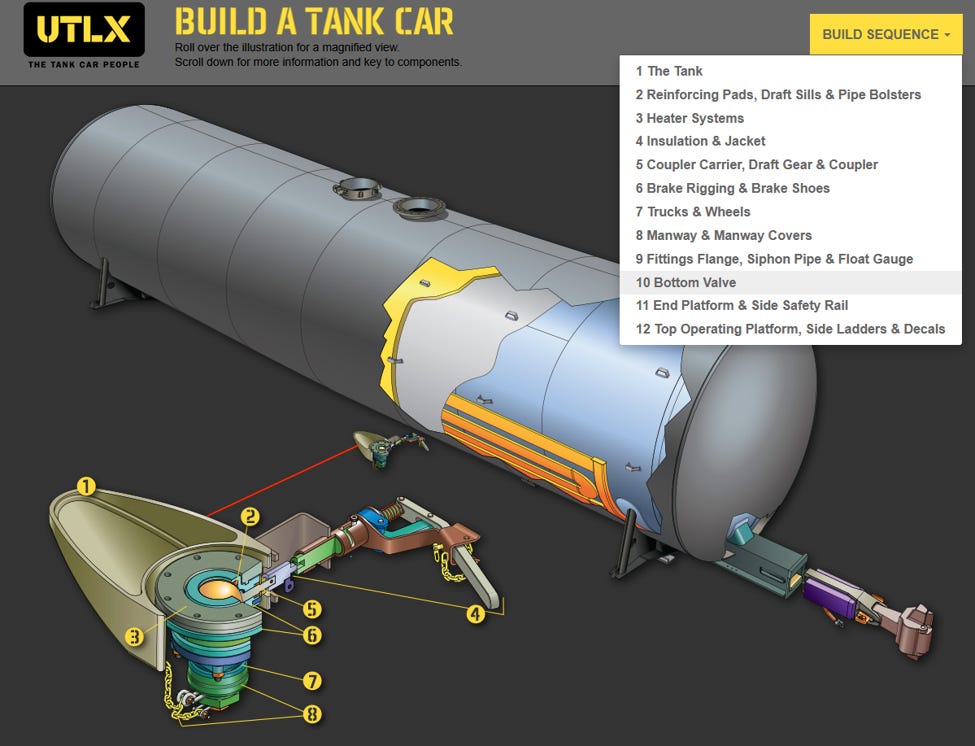
Kelso only does tank car valves. Tank car valves are either for new builds or replacements for damaged or end of life valves. 10 years is a typical service interval, but it can be more frequent. Ever heard of the Chlorine Institute? This is an atypical but fun-for-us case study.
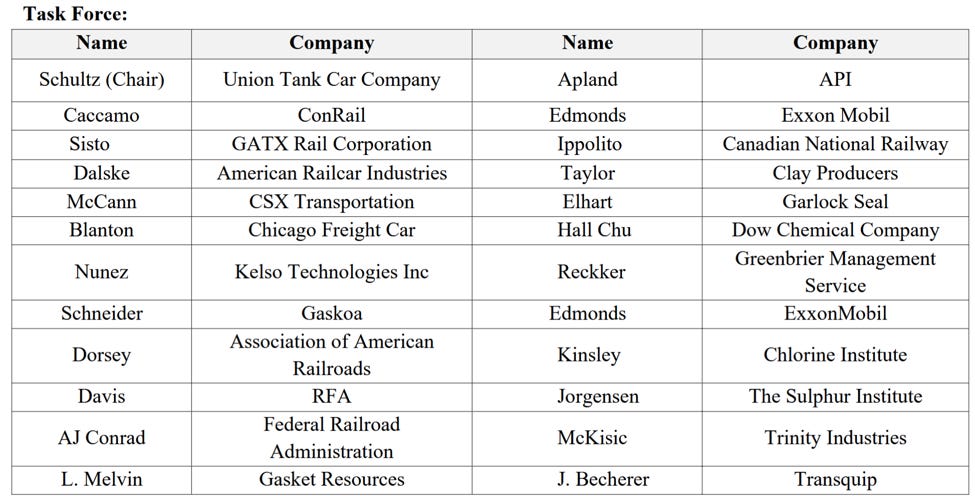
https://www.aar.org/wp-content/uploads/2021/10/TCC-Open-backgrounds-October.pdf
2.3.3.2.6 Valves and fittings may be replaced in kind on tank cars without changing the qualification dates marked on the tank when performed by a certified facility. The facility replacing the valve or fitting shall maintain records of the valve or fitting replacement throughout the qualification interval. AAR recently had an auditor audit a facility under C6 initial certification. Found the facility replacing all service equipment on a Chlorine car on year 5 yet the qualification stencil on the side of the car was set for 10 years. The facility responded to the auditor and said they are allowed to due this per 2.3.3.2.6 of Appendix C. This appears to be a gap in our standard because per federal regulation under 49 CFR 180.509(K) the tank car owner is responsible for determining service equipment inspection and test frequency for qualification based on the design level of reliability and safety of the equipment are met. The facility told the auditor that the reason why they are switching them out is because it is the safe thing to do, but when asked by the AAR auditor if they are following car owner instructions the facility responded that they could not find the authorization from the car owner as required by 49 CFR 180.513(b).
UTLX has put together a helpful guide on how tank cars are made for those that want to click through. https://www.utlx.com/build-a-tank-car/index.html
How Kelso Fits In
We want to say early on our piece today that we think the Company’s recent disclosures under new management are, from our perspective, clear and accurate in general. Market share is strong and we view it as a stable environment. Their customers want at least two options, and Kelso is the higher quality Made-in-America option.
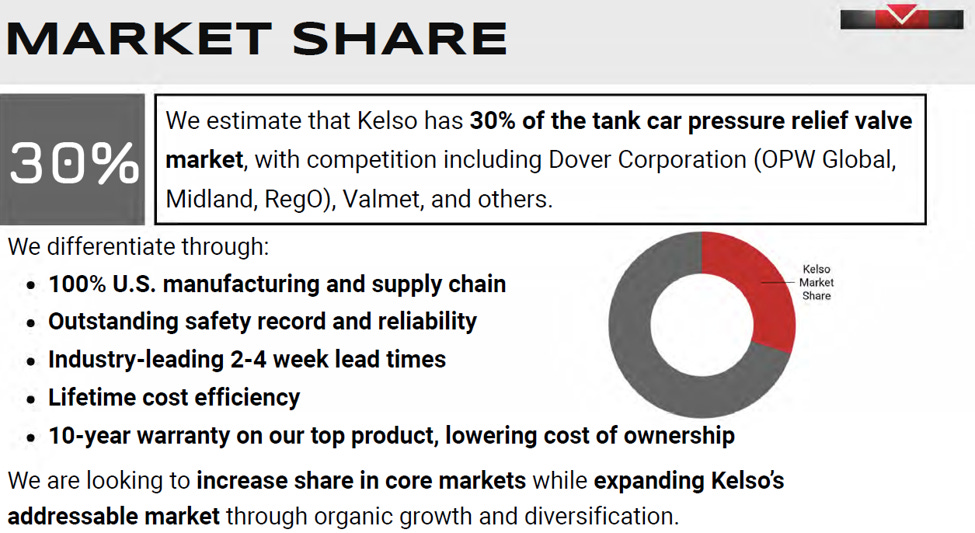
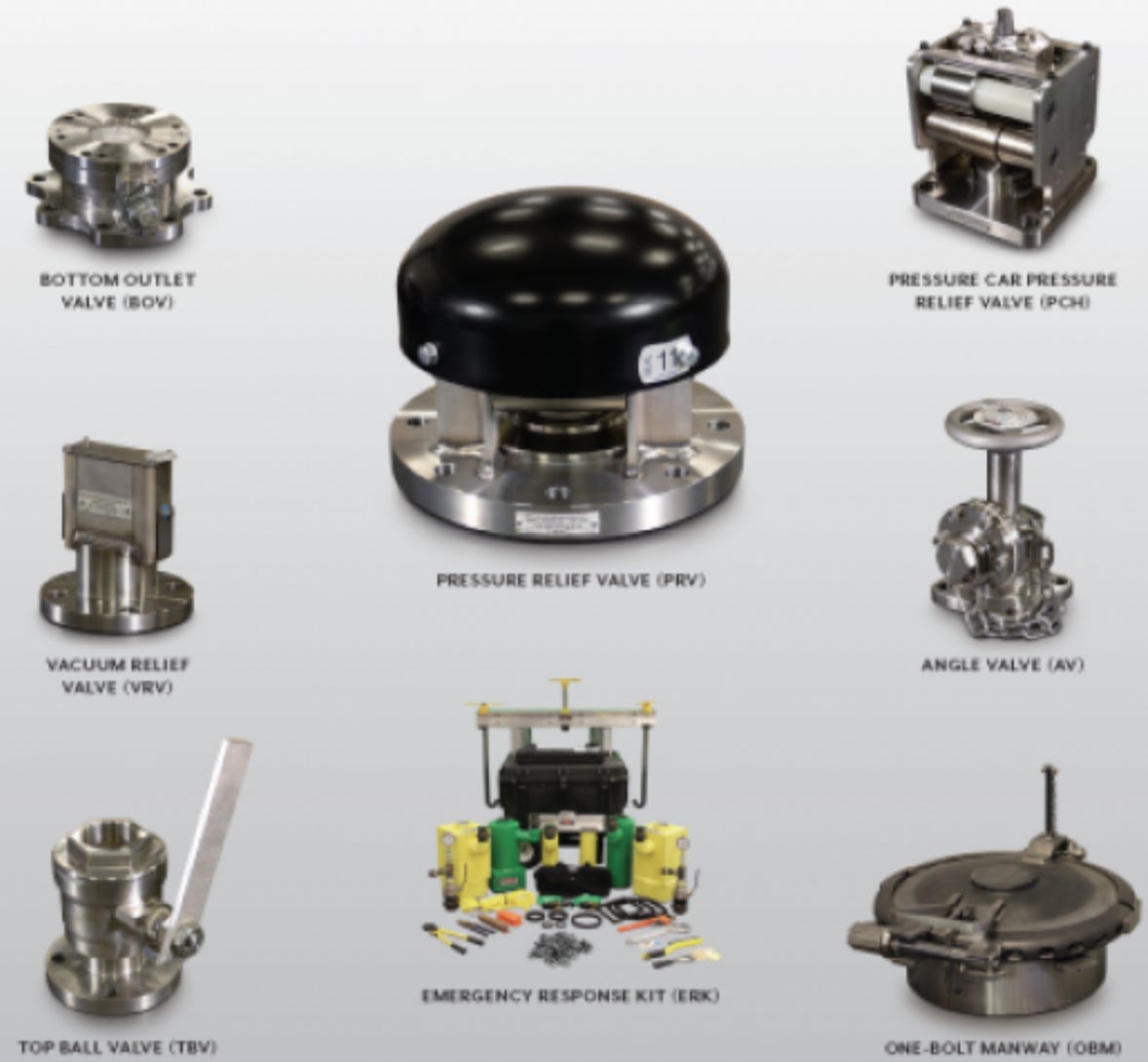
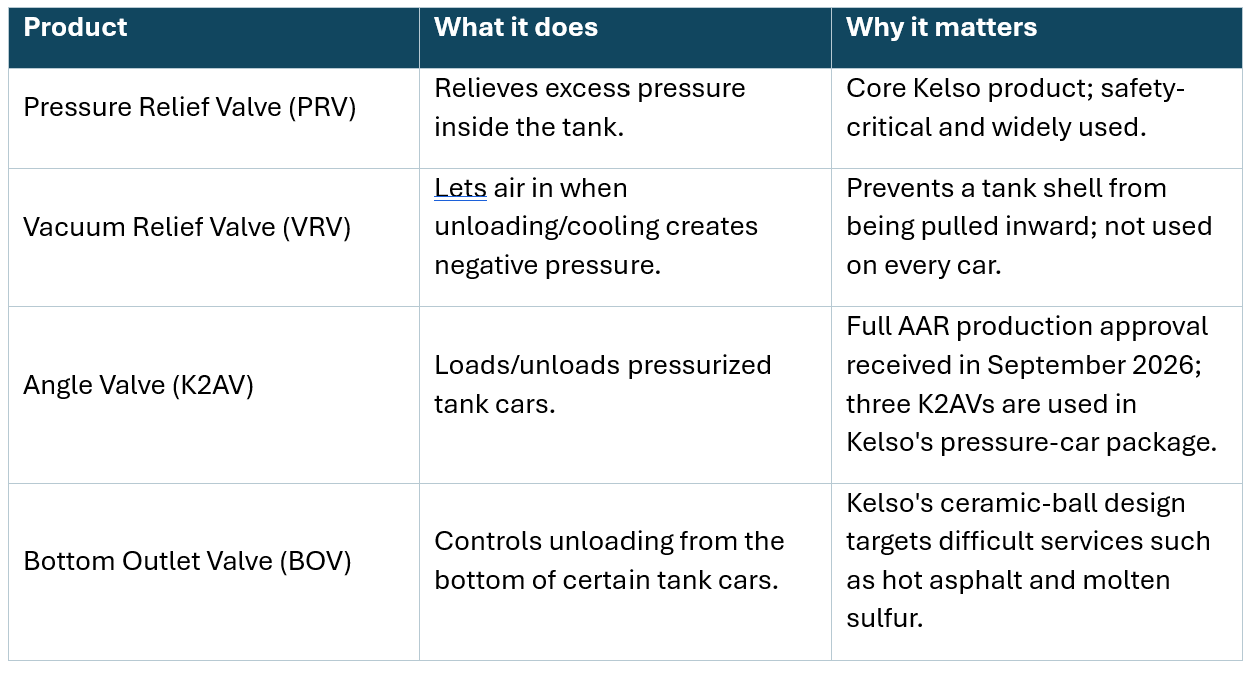
The new build customer base is concentrated. TrinityRail and Greenbrier are the two large integrated public builders (among other businesses like leasing), Union Tank Car is a major private tank-car manufacturer/lessor inside Marmon/Berkshire Hathaway, and National Steel Car remains a private Canadian manufacturer. FreightCar America is also exploring expanding into tank-cars with future new-build capability. The actual end user/car owner is quite varied, and can be a large or small company with a few or many cars. The builder receives an order from their customer and puts out quotes for various components; Kelso bids on the applicable valves. Replacement valves is extremely fragmented. A small shop in a small town might be repairing a one off valve for example.
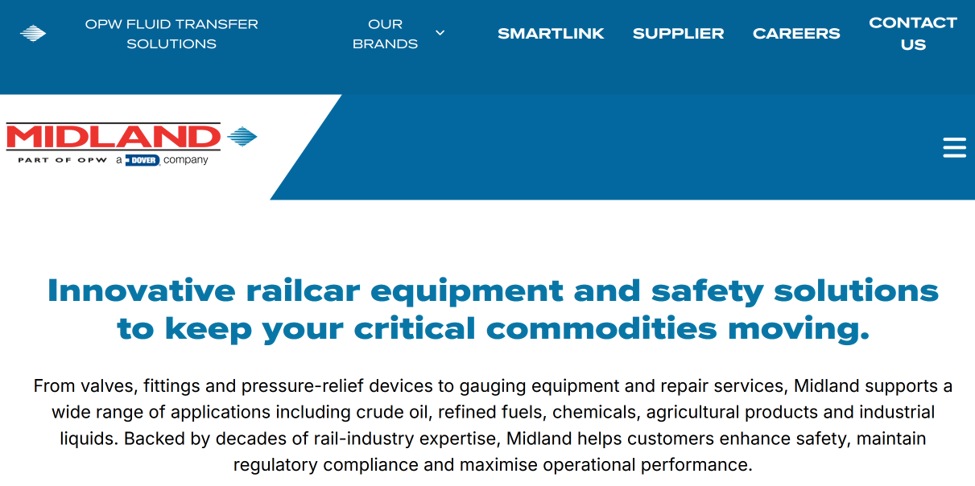
The key competitor in valves is Dover. For Context, Dover has a market cap of ~$27 billion and a trailing P/E of 18x. Rail valves are in the Midland business, which Dover bought in 1994. Today Midland sits inside the OPW Fluid Transfer Solutions unit, part of Dover’s Clean Energy & Fueling operating segment.
While this sounds like a nightmare of a competitor, in reality it is a relatively stable if not good environment for Kelso. Kelso is domestically produced higher quality valves that they can turnaround much faster than Midland’s overseas operations, and their ultimate customers do not want to be in a position of having to sole source valves from anyone.
https://www.opwfluidtransfer.com/brands/midland.html
Industry Overview: A Cyclical Replacement Market
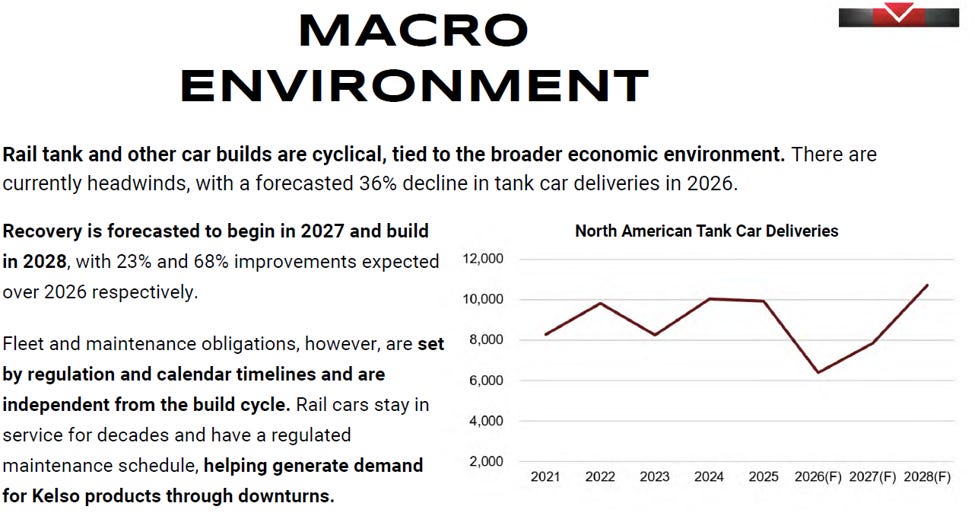
Unfortunately, the industry-wide order book froze this year, with tank car deliveries down 40%.
As per Q2 2026:
Based on current projections from industry analysts (Freight Transportation Research Associates) new tank car deliveries is expected to decline by more than 30% to 6,855 in 2026 down from 9,927 in 2025 before increasing back up to 9,000 in 2027 and 11,700 in 2028. The anticipated new build and re-qualification activity combined with a growing number of qualified Kelso products are expected to fuel new financial growth from rail operations.
North American rail car deliveries peaked at 44,754 units in 2023 and then fell sharply to 31,205 in 2025. Tank cars are a subset of this with yet more subsets with their own dynamics. Tank cars capable of transporting petroleum oil are a particularly interesting case study. Similar to other parts of the oil and gas services world like rigs, there was a significant overbuilding of cars in the 2010s (and the golden years for Kelso), which has created a long cycle of underbuilding.
In 2024/2025 there was a general industry expectation of a turnaround in tank car orders, but the spring tariff challenges and general customer concerns led to a significant freeze up of orders in Q1, as customers try to use existing cars more intensely and for longer. However, Q2 improved though the industry continues to underproduce. Some context from Greenbrier.
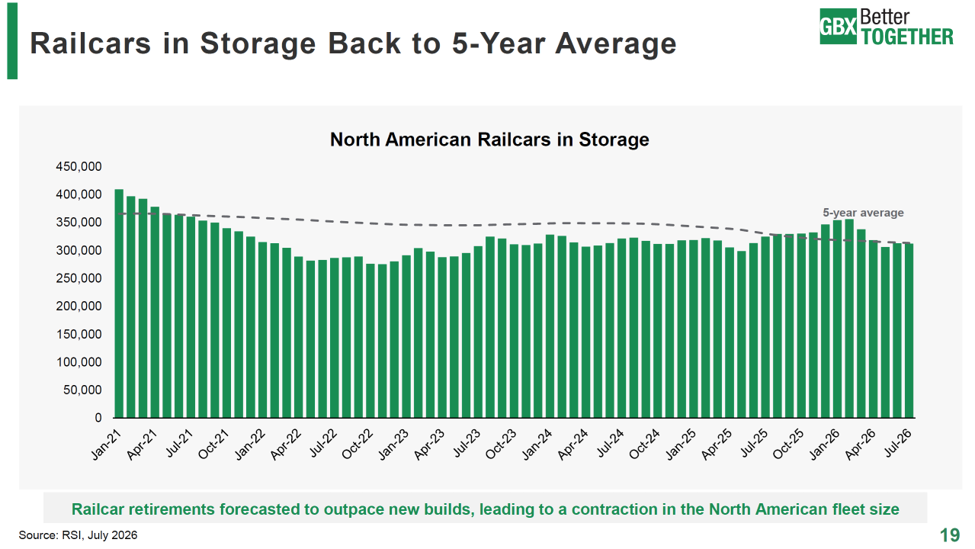
AAR estimates also align, indicating under-building.
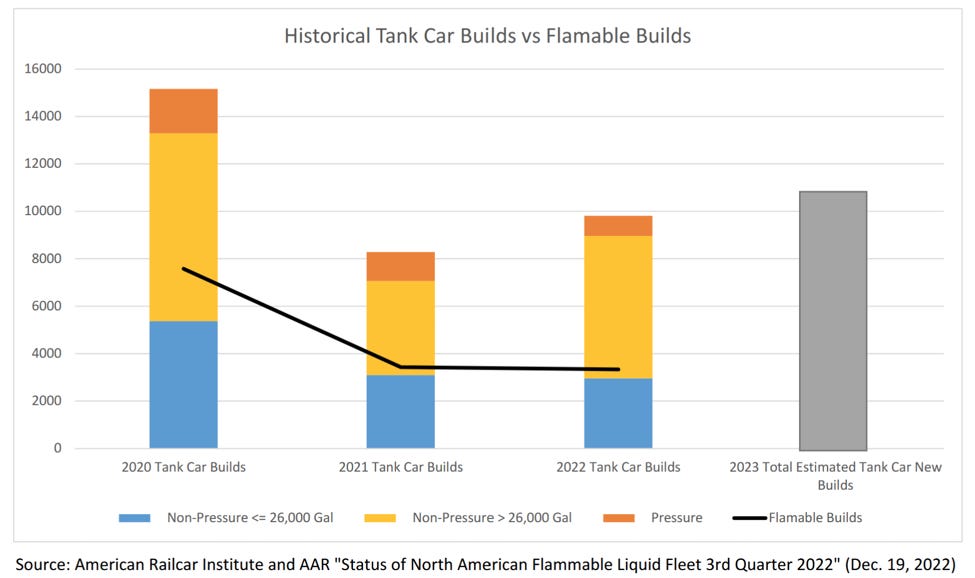
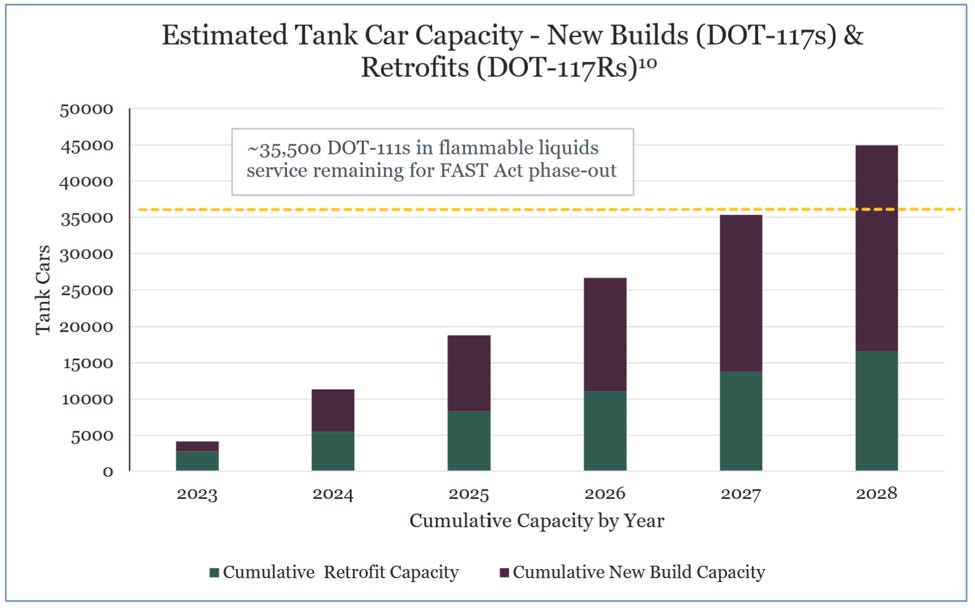
A 2023 Senate Hearing provides important context:
Senate Commerce Hearing on Rail Safety 3.22.2023
I. New Tank Car Build Capacity
Critical Assumptions: To analyze new build capacity, RSI members assumed the following:
-Current Footprint. Current tank car facility certifications and manufacturing footprints will remain the same (i.e., as they exist in March 2023). No greenfield facilities will be constructed.
-Supply Chain. Manufacturers continue to face supply chain challenges and disruptions, including delayed procurement of materials and componentry. Longer lead times can delay production and cause planning challenges. RSI assumes supply chain conditions will be relatively similar in the next several years to those present as of March 2023. It is possible supply chain challenges may gradually abate during 2024/2025. As was witnessed by tank car manufacturers during the COVID pandemic, additional, unforeseen supply chain disruptions could affect new tank car build capacity.
-Labor Conditions. The rail industry continues to face labor challenges/shortages. RSI assumes labor conditions will be relatively similar in the next several years to those present as of March 2023. It is possible labor shortages may gradually abate during 2024/2025. Additional, unforeseen labor shortages could affect new tank car build capacity. Freight Cars. Freight car manufacturing capacity would not be converted to tank car manufacturing capacity.
https://www.commerce.senate.gov/meetings/executive-session-and-rail-safety-hearing/
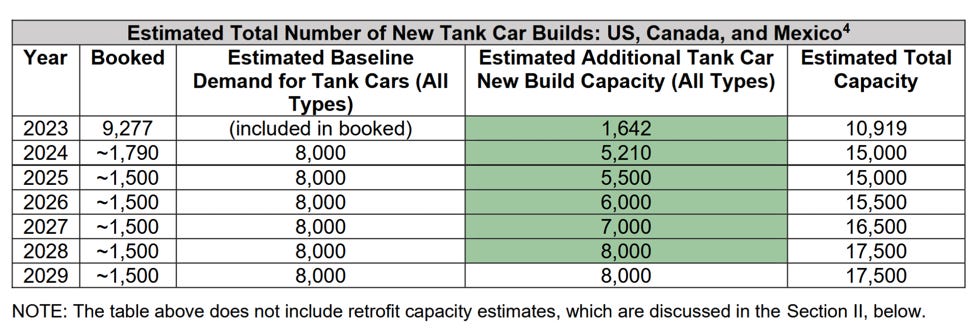
Here is a 2026 update. Note that this is just a smaller subset of overall tank car production and uses.
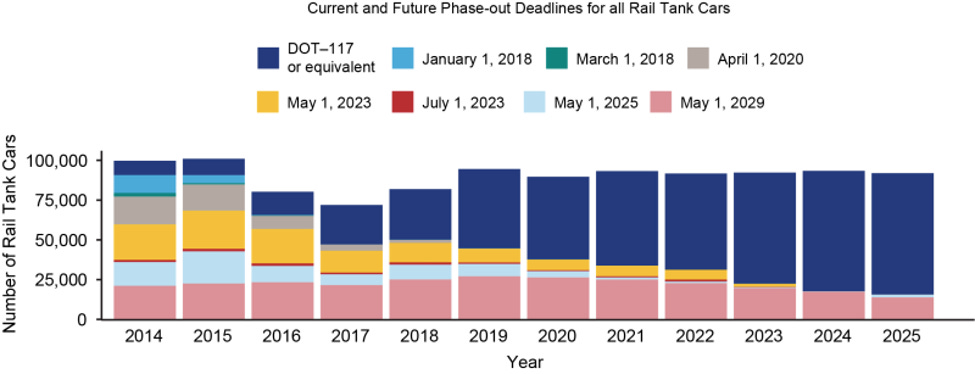
In 2025, 100,485 rail tank cars were used to carry Class 3 flammable liquids, a 0.6-percent decrease from 2024. In 2016, only 8 percent of the fleet that carried crude oil and other Class 3 flammable liquids were DOT-117 tank cars (new or retrofitted), compared to 76 percent in 2025. The remaining 24% of the fleet that carried Class 3 flammable liquids included jacketed and non-jacketed DOT-111 and CPC-1232 tank cars as well as other tank cars that meet or exceed the DOT-117 specifications.
Tank car production has held up better than some rail car categories, but it is also in a downcycle, with 2026 down significantly. Roughly 11,200 tank cars were delivered in 2023, 10,800 in 2024 and 9,927 in 2025. Current forecasts call for only about 6,000-8,000 in 2026 before rebounding toward 11,700 in 2028.
Retrofits increasingly provide Kelso with an opportunity for incremental sales; their first cars have started to come through for mandatory recertifications. The caveat is that if they are not in the specifications for the car as built, they cannot bid on the valve replacement.
Former Management Goes Off the Rails
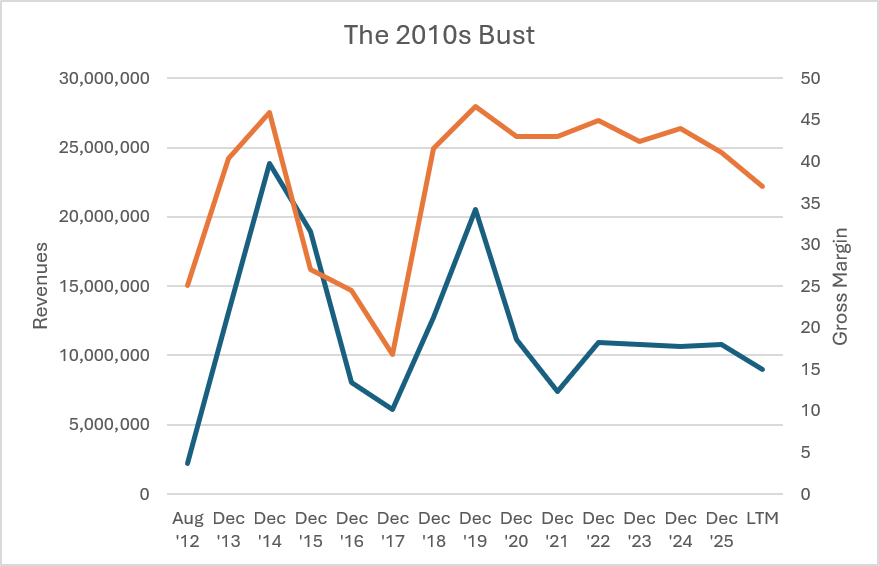
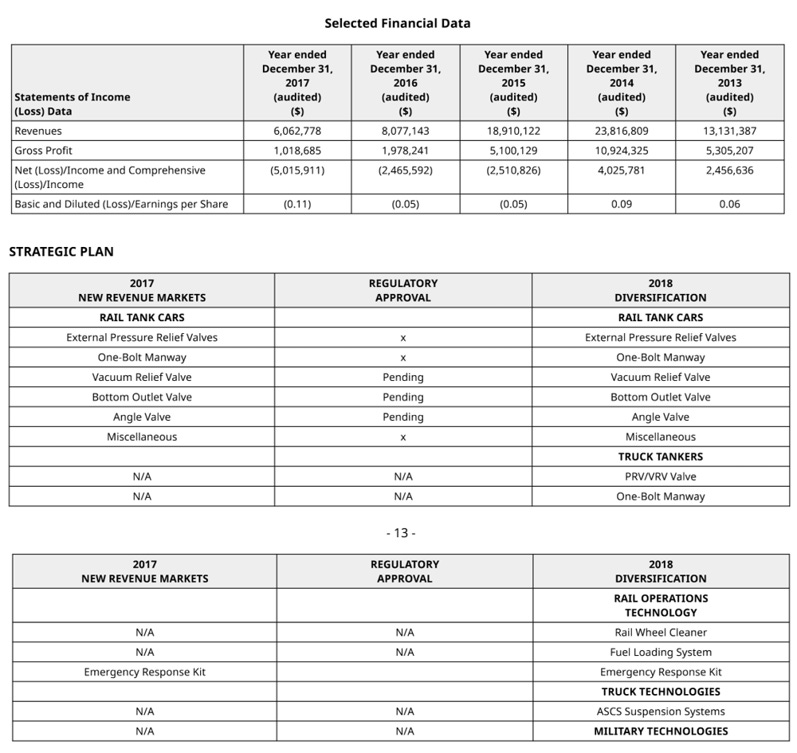
Current management was brought in to reset the business. Previous management’s desire to diversify was understandable given how concentrated and cyclical railcar manufacturing is. If Kelso could use its engineering know-how in another market, maybe it could smooth the cycle.
For us today, their main initiative is a bit of a head scratcher, but we were not in the room. The key (most expensive anyway) diversification effort was developing what became KXI, an automated suspension and traction system for heavy-duty vehicles operating in extreme terrain. The company discussed applications in wildfire response, mining, utilities, medical evacuation and other off-road markets. By early 2024, management was describing a Phase-One facility in West Kelowna that it said could potentially generate about US$25 million of annual revenue and eventually support more than US$100 million at the same location. Our estimate of R&D and related spending for this is in excess of US$5MM on the low end.
For context, the revenue at the time was similar to today. A few prototypes were made, but the business did not get off the ground and has been written off. The is potentially IP there, but we assign no value and view it as a free option. What it did lead to was a full reset of management.
KLS Kelso says former CFO Lee oversaw financial collapse
Kelso Technologies Inc (2) (TSX:KLS)
Shares Issued 54,443,422
Last Close 11/14/2024 $0.14
Thursday November 14 2024 - Street Wireby Mike Caswell
Kelso Technologies Inc. has responded to the wrongful dismissal lawsuit filed by its former chief financial officer, Richard Lee, accusing Mr. Lee of taking the company to “the verge of financial collapse.” Kelso denies that it did anything wrong in firing Mr. Lee, saying that it terminated him after he failed in his duties as CFO. The company further claims that it offered Mr. Lee a $60,000 severance payment, but he refused the offer.
The statements from Kelso come in response to a notice of claim that Mr. Lee filed in the Supreme Court of British Columbia on Oct. 17, 2024. The case arose from the Aug. 30, 2024, dismissal of Mr. Lee which, according to the suit, came with no good reason. Mr. Lee, 68, says that the company had attempted to force him into retirement, but he refused.
According to the suit, the dismissal triggered a clause in Mr. Lee’s employment agreement which stated that he was entitled to 24 months of salary. At the time of his dismissal, Mr. Lee was earning $20,000 (U.S.) per month, plus expenses and a year-end bonus, the suit states. Mr. Lee’s lawsuit is seeking court-ordered damages, plus interest and court costs.
For its part, Kelso claims that Mr. Lee’s firing was justified, coming as part of an effort to save the company. In a response filed on Nov. 7, 2024, Kelso says that the company underwent a management change in July, 2024, after which it became apparent that Mr. Lee had “failed in his financial management duties, leaving the Company on the verge of financial collapse.” The company does not provide any other details, but it says that the solution to the financial troubles included dismissing Mr. Lee.
According to the response, Kelso offered Mr. Lee a one-time payment of $60,000 as part of a “good faith effort” to satisfy any obligations it had to him. The company says that it made the offer despite having no obligation to do so. Mr. Lee worked as an independent contractor, and could be dismissed at any time, the company says. He did have a written contract that included a termination provision, but that contract had lapsed on June 30, 2023, and was not renewed, according to the response.
For those reasons, Kelso is asking that the suit be dismissed. Vancouver lawyer Dianne Rideout of Cassels Brock & Blackwell LLP filed the response on the company’s behalf.
When Kelso fired Mr. Lee, the company had little to say about his dismissal, simply stating that it had “terminated the services of Richard Lee as chief financial officer,” without adding any detail. The dismissal came less than two months after the company’s president, James R. Bond, had retired, appointing Frank Busch as an interim replacement. (While Mr. Bond’s stated reason for leaving was to retire, his retirement came just weeks after he failed to obtain support from a majority of the company’s shareholders at its June 6, 2024, annual general meeting, with just 31.92 per cent of the company’s shares voted in favour of his position as a director.)
Kelso closed at 15.5 cents on the Toronto Stock Exchange Thursday, up a penny.
Now Discontinued
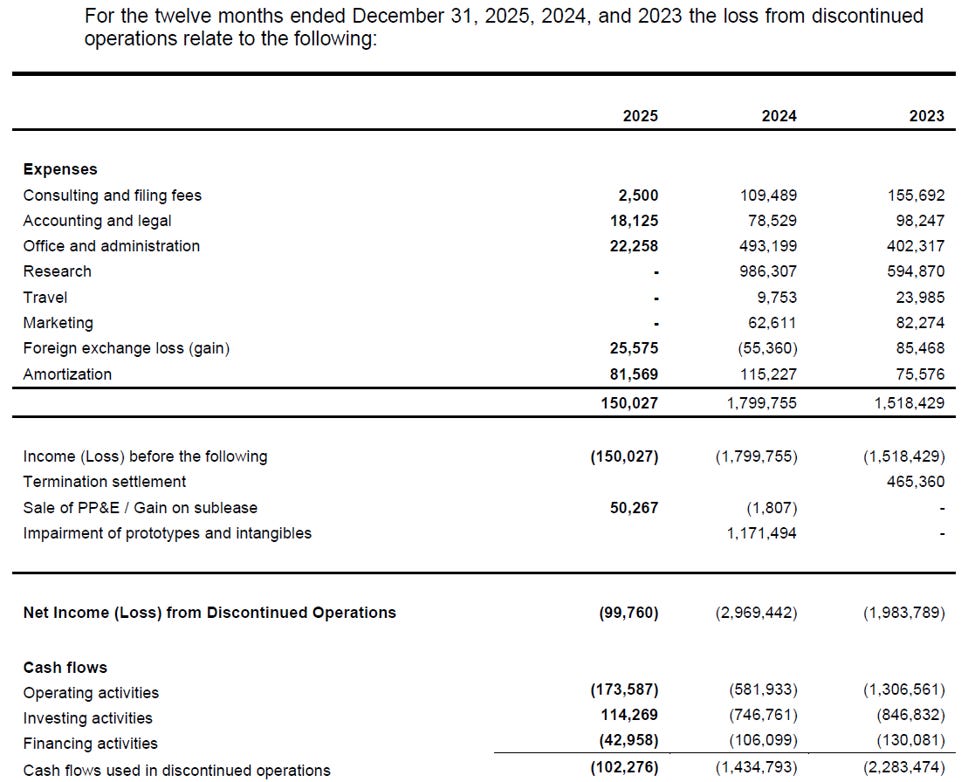
During the year ended December 31, 2024, the Company ceased operations of its KXI HD control system (within its wholly-owned subsidiary, KIQ X Industries (“KIQ X”). Management determined the operations of KIQ X to have met the definition of discontinued operations in accordance with IFRS 5 Non-current Assets Held for Sale and Discontinued Operations. Consequently, the operations of KIQ X have been classified separately from the Company’s continuing operations to show a loss from discontinued operations as a single line in the consolidated statements of operations and comprehensive income loss.
As a result of ceasing operations within KIQ X, indicators of impairment existed leading to a test of the recoverable amount of the KIQ X cash-generating unit, which consists of equipment, prototypes and intangible assets. A value-in-use calculation is not applicable as the Company does not have any expected cash flows from using the assets at this stage. In estimating the fair value less costs of disposal, management estimated a recoverable amount of $NIL representing no pending sale transactions as at December 31, 2025 compared to $89,719 at December 31, 2024. As this valuation technique requires management’s judgment and estimates of the recoverable amount, it is classified within Level 3 of the fair value hierarchy. There were no instruments transferred in or out of Level 3 during the fiscal year ended December 31, 2025.
New Management, New Products
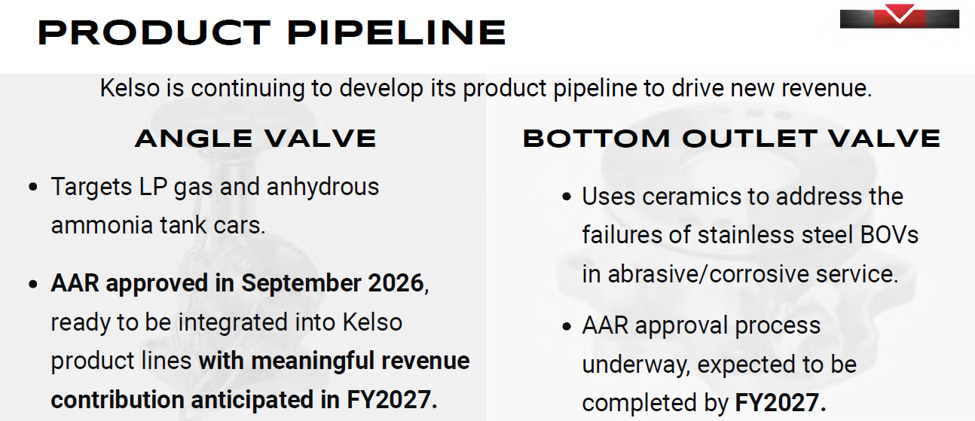
The turnaround began in 2024. It is now led by Jesse Crews as CEO/Director, joining April 2026 (formerly CEO GATX Financial Corporation), but Sameer Uplenchwar (CFO) is the key driver of the initial push of the turnaround and operational changes.
The Canadian R&D operation was wound down, expensive outside professional costs were challenged, an executive position was eliminated as duties were redistributed. The company went from roughly the mid-40s in employees to the mid-20s, while retaining enough redundancy in Texas to keep the AAR-certified operation functioning. FY2025 revenue was almost unchanged but total expenses fell over 20% and Kelso had its first profitable year since 2020.
Unfortunately, the macro environment in 2026 has not been supportive, hiding most of this improvement.